
By: Hannah Ahn
I’ve come into senior year with one goal: to read more. For the past four years, being swamped with schoolwork and extracurriculars means I’ve rarely allocated enough time to a pastime I used to adore more than any other.
Before digital media, there was a hidden world that could be accessed with nothing more than a library card and a few hours of spare time. There truly is no experience quite like getting lost in a book. I can wax and wane about the benefits of reading: how it lengthens your attention span, guides critical thinking, and presents a democratic realm for ideas of all shapes and sizes. But the other great benefit is this: it’s just plain old fun. It’s like having a variety of remarkable friends with vastly different interests and quirks. My biggest goal for senior year was to read my entire bookshelf.
My reading diet has broadened since childhood, yet in many ways grown more insular. Most of what I consume comes from short-form content: New Yorker essays, short stories, poems. For the last three months, I’ve slowly been reintroducing heavier pieces to my reading retinue. Yet the books I find myself most drawn to are the ones with faded covers, at the very back of the shelf– the ones I read years ago.
A few weeks ago, I stopped wrestling with The Count of Monte Cristo and let myself pick up a personal classic instead: Bean and Ivy, about two best friends who are polar opposites. I remember when I was seven, Bean’s rambunctious, thrill-seeking self felt like seeing a kindred soul on the page for the first time. This time, I finished the whole collection in one night. It felt like being plunged back, briefly, into a body that had once belonged to me but was no longer mine.
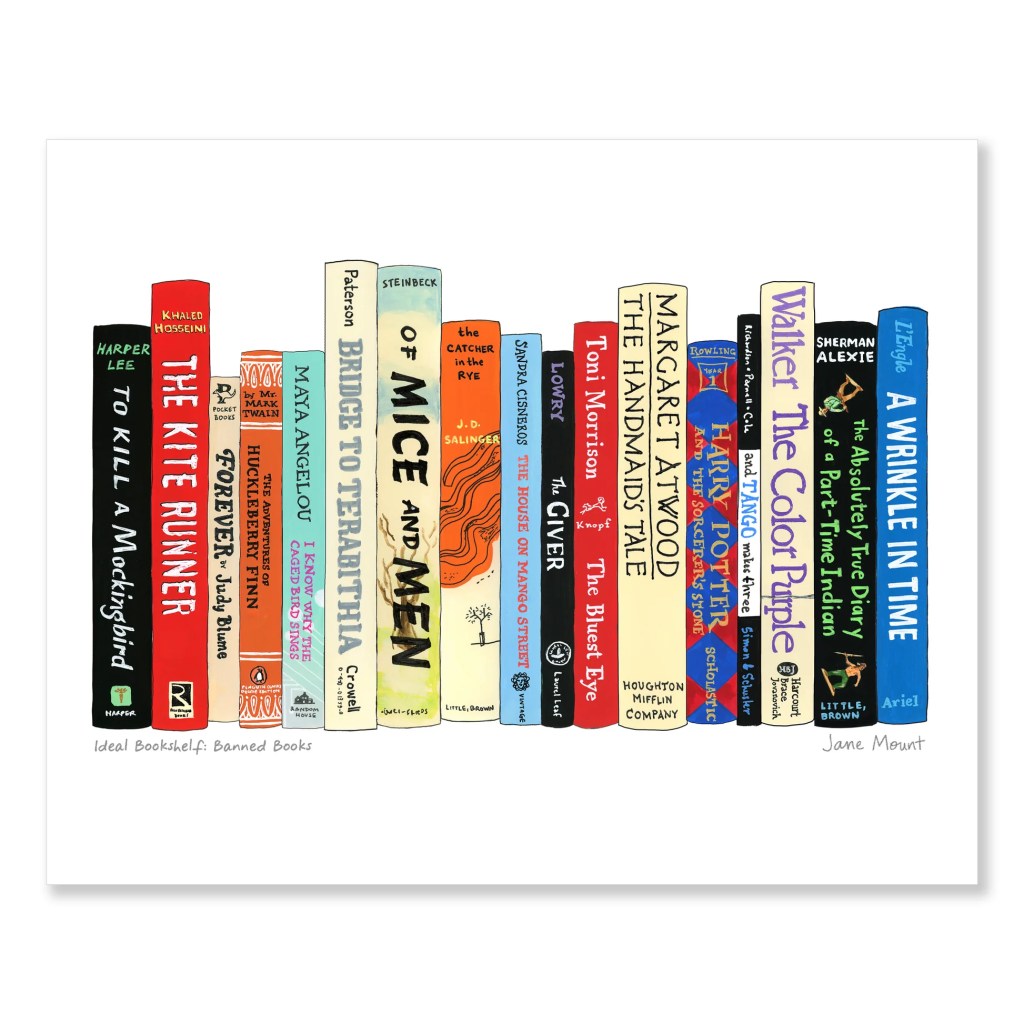
I see fragments of my childhood self scattered everywhere. I’m eight years old, feeling afraid for Jonas as he navigates a strange, clinical dystopia. Sweat dripping down my sunburnt neck as I dig holes with Stanley Yelnats. Harry Potter waves his wand, but the real magic is in the plot twists.
Yet, returning to these old, hallowed places, I find myself older, wiser. I know that the bridge collapses in Bridge to Terabithia, and with it, the main character’s childhood innocence. When I read Harry Potter, I imagine Harry and Ron’s chats in their dining hall will be much like the ones I’ll have next year. (Even eight years later, the grandpa in Charlie and the Chocolate Factory still reads like a useless bum. Some things never change.)
These stories are the molecular DNA of the reader I have become — maybe even the person I have become. My mother often bemoans that she shouldn’t have shown me Caillou as a child, claiming it made me more tempestuous. She points to my brother, who never watched a single episode, as proof. I question her sample size, but maybe it’s true that the stories we encounter when young do not leave us. They are not merely segues into the high-bred classics. On the contrary, they have been formative. I learned the power of friendship through Charlotte’s Web. I learned about the dignity of all living creatures through Old Yeller and The One and Only Ivan. These things could never have been taught with a blackboard and chalk. I could only have learned them by living in the worlds the characters lived in.
What is reading supposed to do? Transport us into new worlds? Teach us something new about ourselves? In a world where education is forever quantified through test scores, I can’t blame coming generations for feeling discouraged by reading: time-consuming, promising results that are neither immediate nor always discernible. Yet to all those questions, I believe reading gives the answer, and more. The powerlessness of childhood is something I remember distinctly: I couldn’t choose where I lived, what I ate, or what I learned. But I could always choose what I read.
As I go into the world, I’ll have to cook and clean, do laundry, file taxes,and regulate my emotions. Yet the feeling of entering a new, strange world on my own terms is not altogether unfamiliar. It’s a feeling I already discovered, rifling through the pages of a new book.
Reader, as you go through life, all sorts of people will tell you what they think is good for you. Listen to them: just as you might read widely, to better understand what the world offers. But keep the classics close. And your sense of identity, closer.
 NEWS AT MRHS
Leave a comment