
By: Ricky He
While most students at Marriotts Ridge High School focus on their classes, sports, and other activities, there is another community in the vicinity of the school. From the dense trees to the short grass, the school is home to dozens of plants and animals. These natural spaces create an environment that supports the school. The trees give shade, shelter, and nesting sites, while the grass and bushes provide food and protection to smaller animals. The land around our school isn’t just for play, but is an ecosystem important to all the animals that inhabit it, helping to maintain a healthy environment.
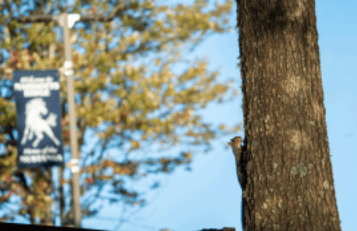
Eastern Gray squirrels are often seen running around near the trees or the pond. Rabbits are also commonly seen near the tennis courts and stadium. Deer are occasionally spotted on the large field or around the baseball fields around dusk. Birds like cardinals, blue jays, and chickadees, which are abundant around the school, stand out against the trees as the leaves start to fall. These animals are important because they help keep the ecosystem balanced. Squirrels spread seeds when they bury acorns, ensuring new trees grow over time. Rabbits help control grass levels and are a food source for other animals like foxes. Deer help spread plant seeds across the field, allowing for the next generation of plants to flourish. Even the birds help out; for example, cardinals and blue jays eat insects and berries, keeping the populations steady and spreading seeds, while chickadees help control pests that survive on larvae hidden in tree bark.
“I didn’t realize how many animals live around our school until I started paying attention to them,” freshman Abhinav Chenutula said.
As winter arrives, the ecosystem around Marriotts Ridge also begins to change. Many animals will adapt to the colder temperatures. Squirrels will gather and store acorns to prepare for days when food is scarce, while rabbits will grow thicker fur to keep them warm. Birds like blue jays and chickadees are still very active during the winter, but other species will migrate to other warmer areas. As the temperatures become colder, many animals start to survive on food they collected from other months, while other animals begin to be less active or go into hibernation to conserve energy.
Some rarer species are harder to see, like the Great Blue Heron, which typically lives around swamps and lakes. Their wingspan can reach up to six feet, making it hard to miss when it’s there. Red foxes are seen crossing roads and near the forest area. The school garden attracts many different pollinators like butterflies and bees, usually around spring and fall. Even though school days are indoors, Marriotts Ridge’s environment shows students and staff that the school is also home to many other wild animals. During the spring, you can see many rabbits roaming around the forest area and the tennis courts. Next time you go outside, see how many different species of animals you can see!


Leave a Reply