
Isabella Kennedy
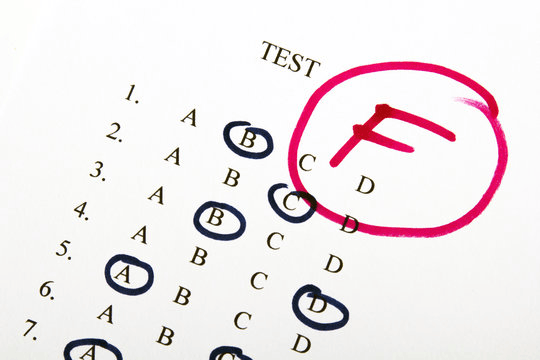
It’s happened to us all: a paper returned covered in more red ink than pencil marks. What really separates students when it comes to poor tests is not who it happens to, but how they recover from it. A test could either end up burying that quarter six feet under, or become a blip on the radar of a near-perfect report card.
The first step to fixing the grade is figuring out what you got wrong, especially if the course curriculum is cumulative. If you get the test back, make sure you know which problems you got wrong, and figure out why. If there’s not enough time in class to do so, ask to see it again after school or during Flex Time. This strategy is key when it comes to building your knowledge up.
“I study the topics and questions I got wrong, and [talking to teachers] can help you with concepts, so you improve,” junior Ahana Nayak said.
Depending on the type of course, there are different ways to improve your understanding. For math classes, ranging from Algebra to Physics, the best way to improve is just repeated practice problems once you understand the basics. Video explanations of concepts and problems can help you learn the foundations of the math.
For classes that require more memorization, such as languages and history courses, getting AI to make adaptive tests based on vocab or facts can be very helpful when it comes to studying, since it can write questions for harder words and ideas to improve your memory.
“I write down conjugations and make flashcards by hand for classes like Spanish,” junior Joy Newberger commented.
What you don’t want to do, however, is ask the teacher for a retake or extra credit, especially if they’ve already said they don’t offer such things. It won’t end up improving your score, nor will it improve their view of you. On the other hand, if a teacher sees you ask for help and come back from a bad score, it will enhance their opinion of you; especially important if you’d like to ask them for a letter of recommendation.
Failing a test isn’t a terrible experience to have. While it could hurt in the short run, it can prove to have been beneficial for learning later on. Students who struggle with a class learn better ways to study, and those who overcome challenges to succeed are better prepared for the future than those who have never struggled in school. Students who don’t develop those skills early on find it harder to tackle problems that confront them in life, proving the value of overcoming challenges while in school.
Succeeding is never impossible. Make sure you’re aware of what you know. While easily the most appealing strategy, lying to yourself about what you really understand isn’t going to get you an A, nor will it help you improve in the class. The key to doing well is understanding what you know, studying what you don’t, and remembering that one bad score doesn’t make the difference between success and failure.


Leave a Reply