
Maddy Shek
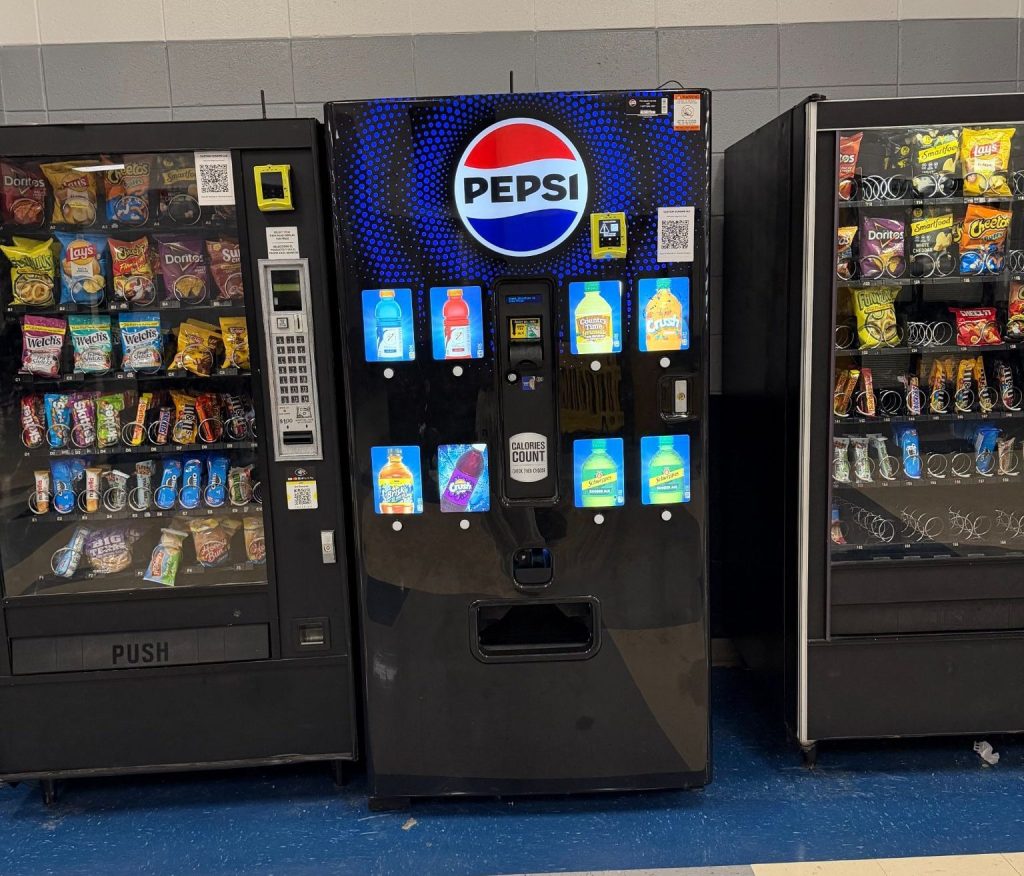
Walking through the hallways of Marriotts Ridge after the final bell rings, students start to notice a familiar scene. Crowds of students exhausted from a long day of school congregate around the school’s community vending machines. These machines have quickly become incredibly popular across both the student body and staff, serving as a vital pit stop for anyone with after-school activities. These vending machines are stocked with a variety of popular snacks and drinks, ranging from refreshing lemonade to classic favorites like Cheetos and candy.
The vending machine’s popularity has skyrocketed recently due to the addition of Apple Pay as a payment option. This modern addition has made buying snacks incredibly accessible to a student population that rarely carries cash. With a quick tap on a phone or even a smartwatch, a buyer can grab a quick snack for the ride home or between rehearsals and athletic drills. However, as thousands of digital transactions pile up week after week, students start to wonder where their money is going.
Because these specific community vending machines are not actually owned or operated by MRHS, their financial operations have felt like a mystery to consumers. Ms. Cherry, the assistant principal, provided some deeper insight into the logistical operations of these machines.
“Most of the [money] goes back to the company because they’re not our vending machines, but it’s typically supposed to go back to student funds,” Ms. Cherry said.
With this partnership, the company has to take on the responsibility of purchasing the inventory, driving to the school to restock the machines, and maintaining the machinery when it malfunctions. In exchange, the vendor keeps the vast majority of revenue generated from students and staff, but at MRHS, the company agreed to give the school some of the profit that goes towards student funds.
While MRHS does not directly pocket the full profit of these machines, they provide a positive and convenient school environment for students. In the cafeteria, the lines close before the final lunch period, leaving students to either wait to get home to eat or eat their leftovers if they have any. For students participating in drama productions, athletic teams, or academic competition groups, these third-party machines are convenient to many.
As digital payment methods make spending easier for students, understanding the buying financial system is more important than ever because it reveals where the money goes and how the funds impact the school community. The next time a consumer taps a phone to purchase a bag of Doritos or a cold soda before practice, students will know that their money is going to a good cause. While the digital payment primarily pays for the convenience of an outside service keeping MRHS fueled throughout the day, the company also splits a portion of those profits to help fund the school’s student activities like buying new sports equipment for the athletes. This subtle economic partnership ensures that every quick snack break ultimately gives back to the school community.


Leave a Reply